
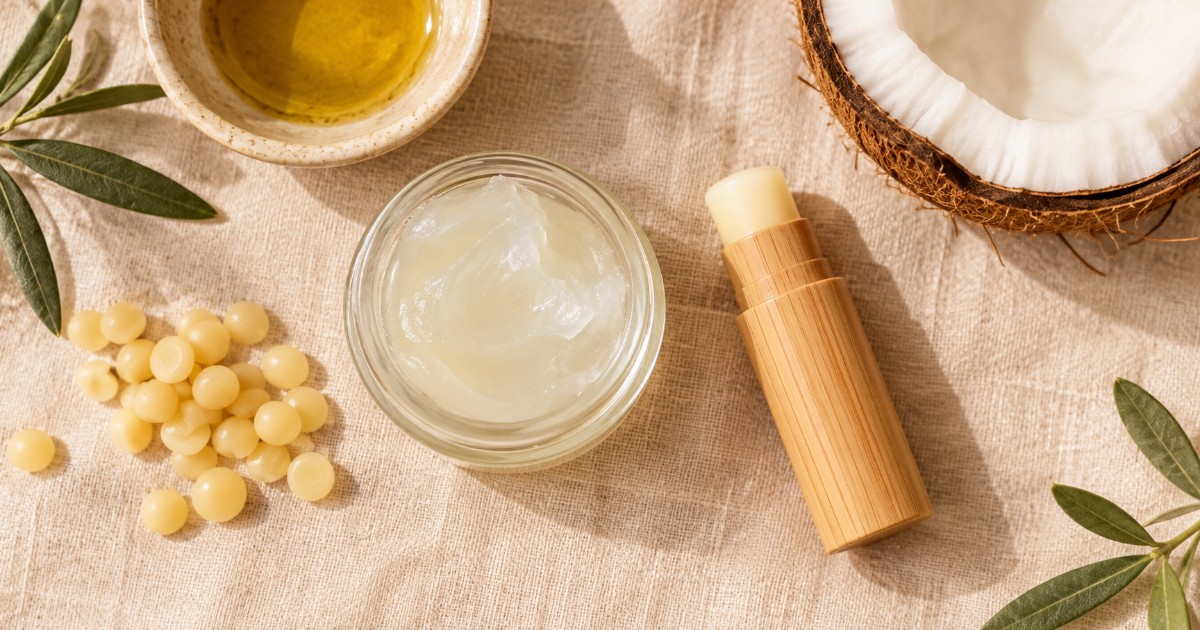
Is Vaseline Good for Your Lips? What Petrolatum Does (and Doesn't) Do
There's a jar of Vaseline in practically every bathroom cabinet, and at some point most of us have dabbed it on dry lips and called it lip care. It's cheap, it's everywhere, and your grandmother swore by it. But lately you've probably also seen it described as "petroleum-based," "occlusive," or something to avoid entirely. So is Vaseline good for your lips, bad for them, or somewhere in between? Here's the honest version—including the parts that don't flatter our own corner of the beauty world.
The quick answer: Vaseline is good at one job on lips: sealing in moisture. It's safe when fully refined, and dermatologists recommend it for very cracked lips. But it doesn't add any moisture of its own, so it works best on damp lips. It's also made from petroleum, which is why many people prefer plant-based balms made with beeswax, butters, and oils.
What Vaseline actually is
Vaseline is a brand name for petroleum jelly, also called petrolatum on ingredient labels. It's a semi-solid mix of hydrocarbons refined from petroleum—a byproduct of the oil industry that was discovered in the 1800s gunking up oil rigs. Cosmetic-grade petrolatum is highly purified, and it's been used on skin for well over a century.
You'll find petrolatum not just in the famous blue-capped jar, but in a huge share of conventional lip balms, where it's often the first or second ingredient.
How petrolatum works on lips: it's a seal, not a drink
Here's the most important thing to understand: petroleum jelly doesn't add moisture to your lips. It traps the moisture that's already there.
Skin-care ingredients that do this are called occlusives. Petrolatum is one of the most effective occlusives there is—it forms a water-resistant film that dramatically slows water evaporating from the skin underneath. That's genuinely useful for lips, which (as we explain in why lips get chapped) have no oil glands of their own and lose water quickly.
But a seal only helps if there's something to seal in. Swipe petroleum jelly over already-parched lips and you're essentially locking in dryness. That's where the "Vaseline makes my lips drier" complaint usually comes from—it isn't drying them out, it just isn't hydrating them either.
The fix: apply it (or any occlusive balm) to slightly damp lips—right after washing your face or a shower—so there's water to hold onto.
The case for Vaseline on lips
Let's be fair here, because the internet often isn't. Dermatologists genuinely like petrolatum:
- The American Academy of Dermatology lists petrolatum and white petroleum jelly among the ingredients dermatologists recommend for dry, chapped lips, and suggests a thick ointment like white petroleum jelly when lips are very dry and cracked, because ointments seal in water longer than waxes or oils.
- It's fragrance-free, flavor-free, and rarely causes allergic reactions, which makes it useful on very irritated skin.
- It's inexpensive and widely available.
So no, Vaseline on lips isn't "bad" in the sense of being dangerous. If it works for you, that's real.
The honest downsides
There are reasonable reasons people look for alternatives, though:
- It does nothing extra. Petrolatum is a barrier and only a barrier. It doesn't bring the fatty acids, vitamins, or antioxidants that plant oils and butters naturally contain.
- Refinement matters. Petrolatum is safe when it's fully refined. Concerns you may have read about relate to contaminants (called PAHs) that can be present in poorly refined petroleum products. Reputable cosmetic-grade petrolatum is refined to remove these, and the EU, for example, only allows it in cosmetics when the refining history is fully known. That said, it's a reasonable question to ask about something you'll inevitably swallow a little of every day.
- It's a fossil-fuel product. Petrolatum is derived from crude oil, a non-renewable resource. For people who care about where their ingredients come from, that alone is a deal-breaker—and it's the reason a seal like USDA Certified Biobased exists: it verifies the carbon in a product comes from plants, not petroleum.
- The texture isn't for everyone. It's thick, shiny, and greasy, and it slides off when you eat or drink.
Plant-based alternatives that do similar work
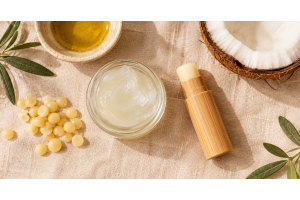
If you'd rather skip petrolatum, nature has its own occlusives and emollients that work well on lips:
- Beeswax: a natural occlusive that forms a breathable protective layer and gives balm its structure. (We compare it with plant waxes in beeswax vs. plant waxes.)
- Plant waxes: carnauba and candelilla do a similar sealing job and are vegan.
- Butters: shea and cocoa butter soften lips and add a cushiony layer.
- Oils: coconut, olive, castor, sunflower, and jojoba oil soften and smooth lips. Castor seed oil and shea butter both appear on the AAD's dermatologist-recommended list.
Vaseline vs. a plant-based lip balm at a glance
| Vaseline (petroleum jelly) | Plant-based balm (waxes, butters, oils) | |
|---|---|---|
| Main job | Seals in moisture (occlusive) | Seals in moisture and softens (occlusive + emollient) |
| Adds nutrients? | No | Plant oils and butters naturally contain fatty acids and vitamin E |
| Source | Refined from crude oil | Plants and bees; renewable |
| Feel | Thick, slick, shiny | Lighter, a little more textured |
| Fragrance/flavor | None | Depends on the product; unscented options exist |
| Best for | Very cracked lips, sensitive skin | Everyday lip care without petroleum |
The tradeoff, honestly: plant-based balms usually don't seal quite as heavily as pure petroleum jelly, and they feel different—less slick, more textured. Many people prefer that feel once they're used to it. For more on what to look for (and what to skip), see our guide to lip care ingredients.
How to get the most out of any lip balm
- Apply to damp lips so the balm has moisture to lock in.
- Reapply before you need it—especially before bed, before going outside, and after eating.
- Stop licking your lips. It feels like relief and makes dryness worse.
- Skip the irritants when lips are cracked. Strong flavors, menthol, and fragrance can sting.
- Wear SPF outdoors. Neither Vaseline nor a natural balm protects you from the sun unless it's labeled with an SPF. (More in our guide to lip sunscreen.)
Where noyah comes in
We don't use petrolatum in our lip balms. Not because petroleum jelly is dangerous—as you've read, it isn't—but because we think lip care, which you inevitably swallow a bit of, should be made of ingredients you'd recognize from a kitchen.
Our Organic Unscented Lip Balm has exactly four ingredients: organic coconut oil, beeswax, extra virgin olive oil, and stevia. That's it. It's USDA Certified Organic and USDA Certified Biobased at 100%, meaning independent lab testing confirmed all of its carbon comes from natural sources rather than petroleum. The tube itself is made with 88% post-consumer recycled material (we explain PCR in our sustainable packaging glossary).
Want a little flavor? Our Vanilla and Cherry balms add natural flavor for five ingredients total, and Spearmint adds spearmint leaf oil and menthol for a cool finish.
One heads-up so you're not surprised: because they don't contain petrolatum, our balms feel less oily and a little more textured than the synthetic balms you might be used to. That's not a flaw—it's what a balm made from plants feels like.
Frequently asked questions
Is Vaseline good for your lips? Vaseline (petroleum jelly) is an effective occlusive that seals moisture into lips, and dermatologists recommend white petroleum jelly for very dry, cracked lips. It doesn't add moisture by itself, so it works best applied to damp lips.
Is Vaseline bad for your lips? Fully refined cosmetic-grade petrolatum isn't considered harmful. The main downsides are that it only seals (with no added nutrients), it's derived from non-renewable petroleum, and some people dislike its greasy texture. Concerns about contaminants relate to poorly refined petroleum products.
Why do my lips feel drier after using Vaseline? Petroleum jelly locks in whatever moisture is already in your lips. If you apply it to very dry lips, it can seal in that dryness. Apply it to slightly damp lips, and pair it with a habit of not licking your lips.
What can I use instead of Vaseline on my lips? Look for balms made with beeswax or plant waxes (carnauba, candelilla) combined with plant oils and butters like coconut oil, olive oil, castor oil, and shea butter. They protect and soften lips without petroleum-derived ingredients.
Can I put Vaseline on my lips overnight? Yes, a thick layer of an occlusive balm overnight is a common way to help chapped lips recover. Apply it to clean, slightly damp lips before bed.
Shop the post: Organic Unscented Lip Balm · Vanilla · Cherry · Spearmint
Sources
- American Academy of Dermatology, 7 dermatologists' tips for healing dry, chapped lips
This article is for general information and isn't medical advice.
Please complete your information below to login.
Create New Account