
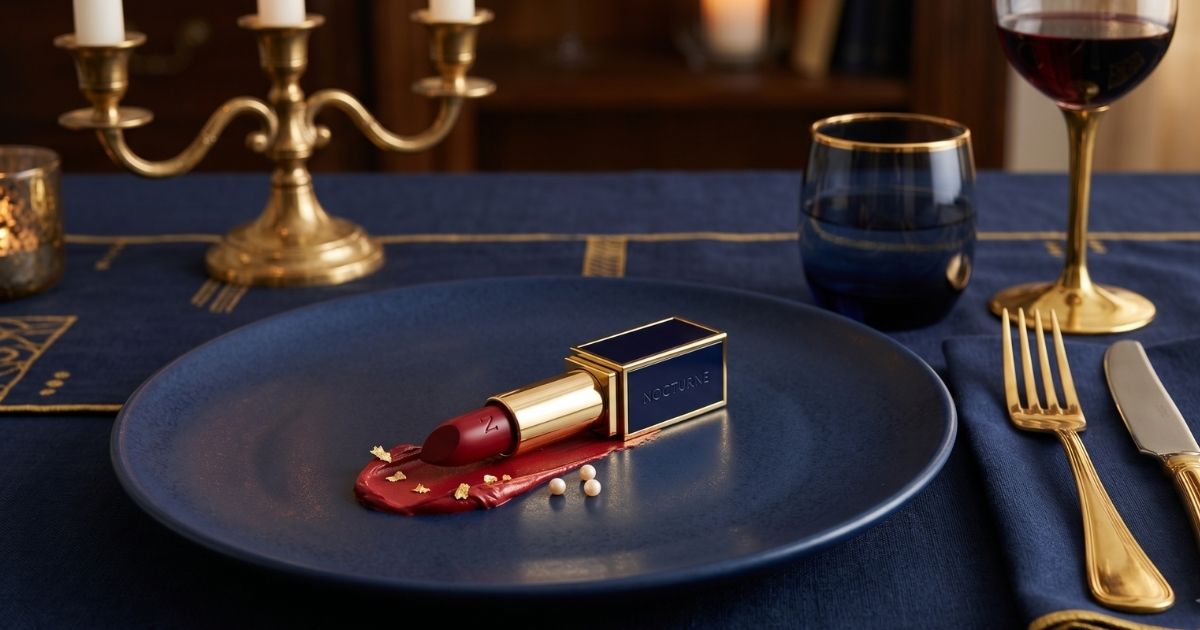
How Much Lipstick Do You Actually Eat in a Lifetime?
Somewhere between a slumber party and a wellness blog, you probably heard it: the average person eats several pounds of lipstick over a lifetime. Seven pounds, says one version. Nine, says another. It’s the kind of fact that makes you put your tube down mid-swipe. So how much lipstick do you actually eat? The honest answer is a lot less than the internet claims—but the question underneath it is a good one, and the truth is more interesting than the myth.
First, the myth: you are not eating seven pounds of anything
Let’s do the math the rumor never does. A standard tube of lipstick holds roughly three grams of usable product. To eat seven pounds, you’d have to swallow every last scrap of more than 1,000 tubes—no kissing it onto a coffee cup, no blotting it on a napkin, no abandoning a half-used bullet in the bottom of a bag (be honest, you have several). You’d need to consume one full tube per month, every month, for the better part of a century, and somehow ingest all of it.
Nobody does this. Fact-checkers have traced the “pounds” claim back to a magazine quickie tip from 2002, after which it mutated into ever-larger numbers because bigger sounds scarier. The decimal-point versions—“5.65 pounds!”—are especially suspect. Precision is not the same as accuracy.
The real number: small, steady, and worth paying attention to
Here’s what researchers actually found. A widely cited University of California study estimated that someone applying lip products a couple of times a day ingests roughly 24 milligrams of product daily. Heavier reappliers—you know who you are—land closer to 87 milligrams. Over a year, that adds up to something like a fraction of an ounce, not a pound. Across a lifetime of devoted lip-color loyalty, you might consume the equivalent of a few tubes. Not nothing. Not seven pounds.
Why do we eat any at all? Because lips are working surfaces. You talk, sip, snack, press your lips together, and reapply—and a little product leaves with each of those. Lips also have no oil glands of their own and a famously thin barrier, so whatever you put on them sits right there, ready to be licked away or absorbed. The dose is small. It is also genuinely, unavoidably real.
So the question isn’t “how much”—it’s “made of what”
If you’re going to eat a little of your lip product no matter what, the part worth caring about isn’t the quantity. It’s the ingredient list. A few milligrams a day of coconut oil and beeswax is a non-event. A few milligrams a day of something you can’t pronounce, accumulated over decades, is a fair thing to ask questions about.
Take lead, the ingredient that launched a thousand scare headlines. Lead isn’t added to lipstick on purpose; it shows up as a trace contaminant in some color pigments. The https://www.fda.gov/cosmetics/cosmetic-products/limiting-lead-lipstick-and-other-cosmetics and recommends a ceiling of 10 parts per million, noting that more than 99% of products on the U.S. market already come in at or below that line. Reassuring on the whole—but “most products, most of the time” is a different promise than “nothing you’d rather not swallow.” Lead has no known safe level, and it’s not the only metal that has turned up in testing of conventional lip color.
This is the quiet logic behind the whole clean-beauty conversation. Lipstick lives in a regulatory gray zone: companies don’t have to file their formulas or share safety data before a product hits shelves. That doesn’t mean your favorite tube is dangerous. It means the burden of reading the label has landed on you.
Our slightly radical position: if you’ll eat it, make it like food
This is exactly the thought that started Noyah. The founder—a medical doctor, which makes the leap into lip balm either very logical or completely absurd depending on how you look at it—kept circling the same idea: you ingest pounds of lip care across a lifetime (the small-but-real kind, not the mythical kind), yet these products get made in cosmetics factories. If you eat it, https://www.noyah.com/ourstory? So some of ours are made from 100% food, in kitchens rather than chemical plants. Our lip scrub and our entire lip balm line are USDA Certified Organic. Nearly everything we make is certified biobased—a fancy way of saying a lab confirmed the carbon in it came from plants, not petroleum.
Which means when a little of your food-grade lip balm inevitably ends up in the “eaten” column, the worst-case scenario is … you had a snack. A very small, coconut-flavored snack. The same thinking runs through our natural lipstick—real color, minus the ingredients you’d rather not think about consuming twice a day for the next forty years.
What to actually do with this information
You don’t need to swear off lip color, calculate your annual milligram intake, or feel guilty about the tube in your bag. You just need to flip it over. A short, recognizable ingredient list is the whole game. Look for plant oils and butters—coconut, shea, castor—and waxes like beeswax or candelilla doing the structural work.
If you want the deeper version of this—https://www.noyah.com/blog/ingredients-lip-care versus what just sits on them—we wrote a whole piece on it. The short version: choose lip products the way you’d choose a snack, because functionally, that’s part of what they are.
Frequently asked questions
Besides applying a good lip balm, there is more you can do to keep your lips from wrinkling. Here’s how to give your lips the full treatment:
- Hydrate from Within: Drink plenty of water. No amount of balm can save you if you’re running on caffeine and vibes.
- Gently Exfoliate: Use a soft toothbrush or sugar scrub weekly to remove dead skin. No need to sandblast.
- Avoid Licking Your Lips: It might feel soothing, but saliva (fancy word for spit) evaporates quickly and leaves lips even drier.
- Apply Before Bed: Slather on a thick, nourishing balm before you sleep and wake up to a pillowy-soft pout.
It’s Not Just Lip Service
Do you really eat pounds of lipstick in a lifetime?
No. The popular “four to nine pounds” claim doesn’t survive basic math—it would require swallowing the entirety of over a thousand tubes. The real figure is far smaller: a few milligrams a day, which adds up to roughly the equivalent of a few tubes across a lifetime.
Is it safe to eat lipstick?
In the small amounts you incidentally ingest, most lip products are considered safe by the FDA. The bigger-picture concern is long-term, repeated exposure to trace contaminants like heavy metals and to synthetic ingredients—which is why many people prefer lip products made from food-grade or certified-organic ingredients. This is a topic worth raising with a healthcare provider if you have specific concerns.
How much lipstick is actually ingested per day?
Research suggests around 24 milligrams a day for average users and up to roughly 87 milligrams for frequent reappliers. It leaves your lips through talking, eating, drinking, and reapplication.
What ingredients should I look for in a cleaner lip product?
A short list of recognizable ingredients: plant oils and butters (coconut, shea, castor), natural waxes (beeswax, candelilla, carnauba), and certifications like USDA Organic or certified biobased. Treat anything you can’t identify as a reason to read more closely.
Validate your login
Create New Account