
Why Your Lips Have No Sweat Glands (and What That Means for Care)
Your lips are doing a lot of quiet work—talking, eating, kissing, expressing every feeling your face has ever had—and they’re doing it with some genuinely strange equipment. Or rather, without it. A few lip anatomy facts that surprise almost everyone: your lips have no oil glands, no sweat glands, barely any of the pigment that protects the rest of your skin, and a density of nerve endings that rivals your fingertips. Once you know what makes lip skin so different, every quirk—why they’re red, why they chap, why they need help—clicks into place. Five facts, and what each one means for you.
1. Your lips have no oil or sweat glands—a club with only two other members
The rest of your skin comes equipped with sebaceous (oil) glands and sweat glands that keep it lubricated, cooled, and protected. Your lips have neither. No oil glands to keep them supple, no sweat glands, and no hair follicles either.
That last trait is rarer than it sounds: the only other places on your entire body with no hair follicles are the palms of your hands and the soles of your feet. Your lips are in very exclusive company. The practical consequence is big, though: with no oil glands, lips can’t self-moisturize the way your face does. Their only natural source of moisture is saliva, which evaporates fast. That’s the root reason they dry out and chap so readily—they’re structurally on their own.
2. They’re red because they’re basically see-through
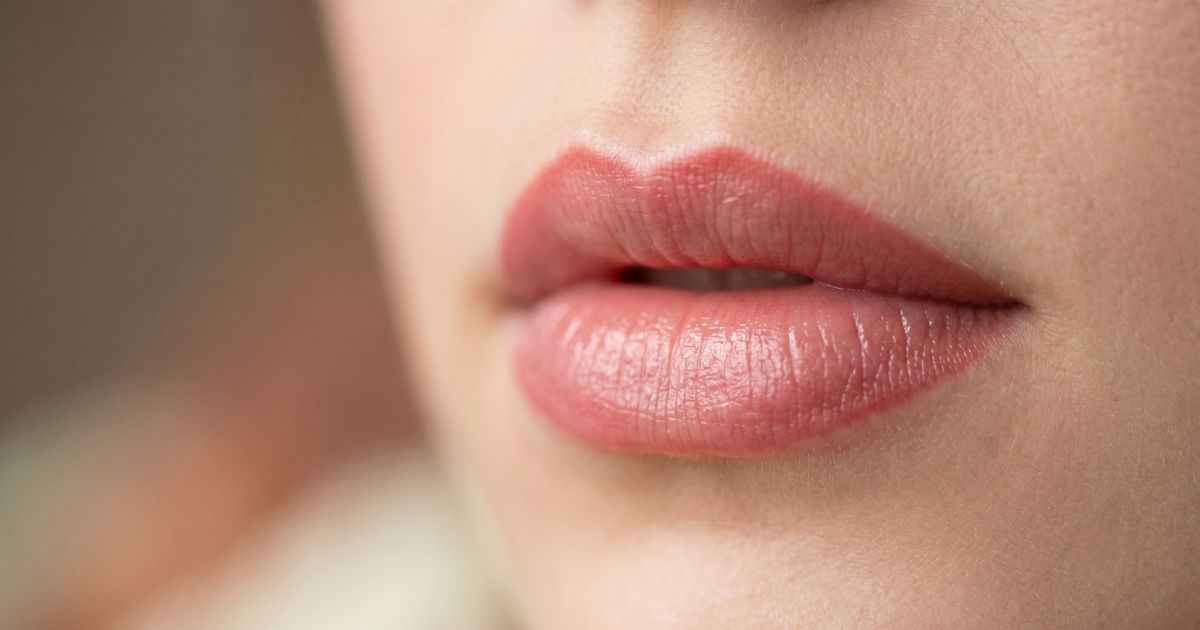
Why are lips red—or, depending on skin tone, pink to brown—when the skin millimeters away isn’t? Two reasons stack up. First, lip skin is dramatically thinner than facial skin: the outer layer is only about three to five cell layers deep, versus roughly sixteen on the rest of your face. Second, lips contain very few melanocytes, the cells that produce the pigment melanin.
Put those together and the blood vessels sitting just beneath the surface show right through the thin, low-pigment skin. The red you see is, quite literally, your blood. (In darker skin tones the effect is gentler, because more melanin in the lips makes them visually darker.) The dividing line where this see-through lip skin meets normal facial skin even has a name—the vermilion border—and here’s a genuinely odd bit: it exists only in humans. No other animal has one, and science doesn’t fully know why.
3. Almost no melanin means almost no built-in sun protection
Melanin isn’t just about color—it’s your skin’s built-in sunscreen, absorbing some UV before it can do damage. Since lips have so little of it, they have very little natural defense against the sun. That makes them surprisingly vulnerable: prone to burning, and to cumulative sun damage that ages them and, in the longer term, carries real skin-cancer risk. The lower lip takes the worst of it, because it juts out and catches more direct light.
The takeaway is the one people most often miss: lips need sun protection year-round, not just at the beach. A daytime balm with SPF is doing genuine protective work on a part of your face that can’t protect itself.
4. They’re one of the most sensitive surfaces on your body
For all their fragility, lips are sensory powerhouses. They’re packed with nerve endings—by many accounts among the densest concentrations anywhere on the body, in the same league as your fingertips. That thin skin sitting right over all those nerves is exactly what makes lips so good at fine sensation: distinguishing temperature, texture, the faintest touch.
It’s also why lips are central to so much of being human, from the precise muscle control that lets us form speech to, well, kissing. The flip side of all that sensitivity is that lips feel irritation acutely too—which is a good argument for being choosy about what you put on them, and for steering clear of the harsh, tingly, irritant ingredients we’re forever grumbling about.
5. They thin and lose definition as you age
Lips aren’t static. Over time, that already-thin skin tends to get thinner, the sharp edge of the vermilion border softens, the cupid’s bow loses some of its peak, and fine vertical lines appear around the mouth. Sun exposure accelerates all of it—which loops back to fact #3. Consistent moisture and daily sun protection are the least glamorous but most effective way to keep lips looking healthy and full over the long haul, far more so than any quick-fix tingle.
What all this means for taking care of them
String the five facts together and lip care stops being a vague routine and becomes obvious. Because lips can’t produce their own moisture, you supply it. Because they have no UV defense, you add SPF by day. Because they’re thin and sensitive, you keep what touches them gentle and simple. And because they thin with age and sun, you stay consistent rather than chasing fixes.
This is the whole reason we treat lips as a special case rather than an afterthought. They can’t look after themselves, so a good balm supplies the moisture they can’t make, and a short list of nourishing ingredients respects how sensitive and thin that skin really is. Given that you also swallow a little of whatever’s on them, making lip care gentle and clean isn’t fussiness—it’s just paying attention to what lips actually are.
Frequently asked questions
Why don’t lips have oil glands?
Lip skin simply isn’t structured with sebaceous (oil) glands, sweat glands, or hair follicles—the only other hair-follicle-free zones on the body are the palms and soles. Because they can’t produce their own oil, lips rely on saliva and whatever you apply, which is why they dry out so easily.
Why are lips red?
Lip skin is very thin (about 3–5 cell layers versus ~16 on the face) and contains little melanin, so the blood vessels just beneath the surface show through. In darker skin tones, more melanin makes the lips visually darker, so the effect is less pronounced.
Do lips need sunscreen?
Yes. Lips have very little melanin and therefore little natural UV protection, making them prone to sunburn and cumulative sun damage—especially the lower lip. A daytime lip product with SPF helps protect them year-round.
Why are lips so sensitive?
They have a very high density of nerve endings—comparable to the fingertips—sitting beneath unusually thin skin. That makes them excellent at fine sensation, but also quick to feel irritation, which is a good reason to avoid harsh ingredients.
Validate your login
Create New Account