
The Sustainable Packaging Glossary: PCR, Bamboo, Sugarcane & More
Beauty packaging has developed a whole vocabulary of green-sounding words—PCR, bioplastic, compostable, recyclable, biobased, ocean-bound—and most of us nod along without being totally sure what any of them mean. That’s a problem, because the gap between “sounds eco” and “actually helps” is where greenwashing lives. This is your plain-English glossary of sustainable cosmetic packaging: what each term really means, which ones do the most good, and the crucial distinctions (like why “biodegradable” and “recyclable” are not the same thing) that let you see through the marketing.
The big confusion first: recyclable ≠ biodegradable ≠ compostable
Start here, because these three get used interchangeably and they shouldn’t be. They describe completely different end-of-life journeys:
- Recyclable means the material can be collected, reprocessed, and remade into something new—if your local facility actually accepts it. Glass, aluminum, and certain plastics qualify.
- Biodegradable means it will eventually break down via microorganisms—but with no guaranteed timeframe or conditions. Some ‘biodegradable’ plastics only partly break down and can leave microplastics behind. It’s the vaguest of the three.
- Compostable means it breaks down fully into non-toxic components—but usually only in an industrial composting facility meeting specific standards, not your backyard bin. ‘Compostable’ in a landfill often just… sits there.
The lesson: a label shouting “biodegradable!” may be doing far less than a boring “recyclable” one, depending on what happens after you’re done. Specifics beat vibes.
The materials, decoded
PCR (Post-Consumer Recycled)
Probably the term you’ll see most. PCR—also called post-consumer resin—is material made from products consumers already used and recycled (think old bottles), reprocessed into new packaging. “70% PCR” means 70% of that packaging came from recycled material instead of virgin resin. It’s genuinely useful: it diverts waste from landfill, uses less virgin material, and lowers the carbon footprint versus all-new plastic. Don’t confuse it with PIR (post-industrial recycled), which is factory scrap recaptured before it ever reached a consumer—helpful, but a lower bar.
Bioplastic / PLA
Bioplastics are made wholly or partly from plant biomass—corn, sugarcane, cassava—rather than fossil fuels. PLA (polylactic acid) is the most common. The appeal is renewable sourcing and potentially lower emissions. The catches are real, though: most PLA is compostable only in industrial facilities (not at home, and not in standard recycling), and growing the crops carries its own footprint—farmland, pesticides, and the food-versus-materials question. “Plant-based plastic” sounds like a clean win; it’s genuinely better in some ways and complicated in others.
Glass
One of the quiet champions. Glass is infinitely recyclable—it can be recycled over and over with no loss of quality—and it’s inert, so it doesn’t leach into products. The downsides are weight (heavier to ship, which adds transport emissions) and breakability. For many products it’s an excellent choice; for a lip balm you toss in a bag, less practical.
Aluminum & metal
Like glass, aluminum is infinitely recyclable without degrading, and it’s lightweight. It’s a strong option for tubes and tins, and aluminum recycling is well-established and energy-saving compared to producing new metal.
Bamboo
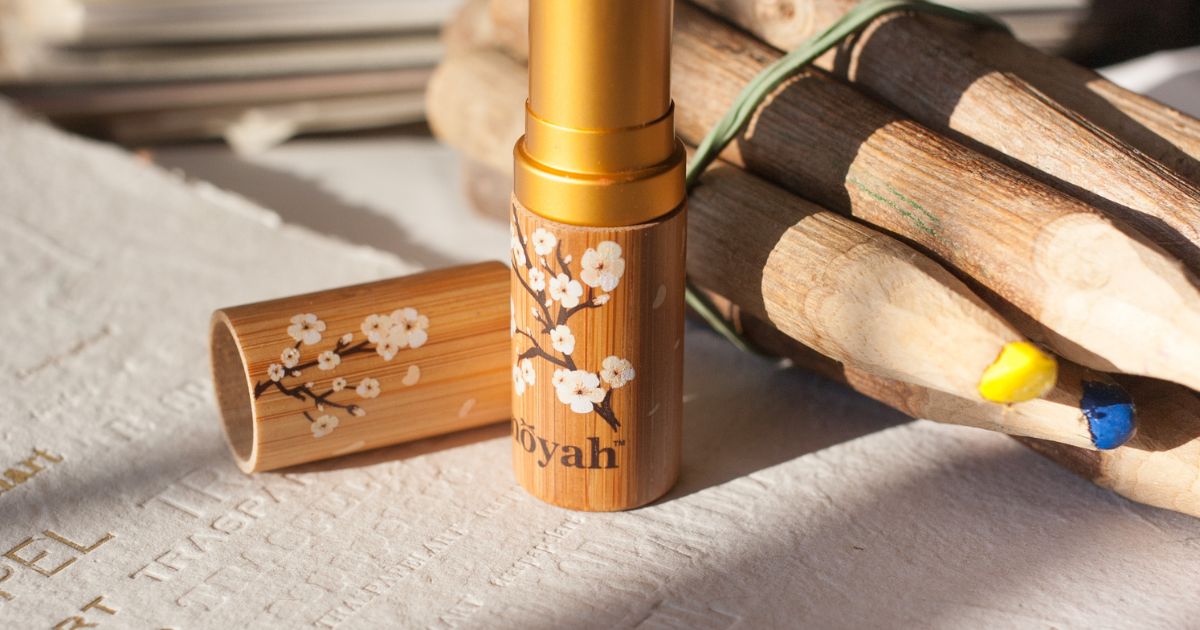
A fast-growing, renewable plant that shows up as caps, lids, and outer components. The nuance: bamboo is often used as a layer over a plastic inner, so the “bamboo” part may be a shell rather than the whole package. Worth checking what’s underneath.
Paper & paperboard (incl. FSC, seed paper)
Recyclable and often recycled, especially for outer cartons. “FSC-certified” means the paper comes from responsibly managed forests—a verified claim worth looking for. ‘Seed paper’ (embedded with seeds you can plant) is a charming niche use. The catch: laminations and plastic coatings can make otherwise-recyclable paper non-recyclable.
The greenwashing red flags
As with ‘natural’ and ‘clean’ on the formula side, packaging language is full of words that sound better than they are. A few flags:
- Vague claims with no specifics: ‘eco-friendly,’ ‘green,’ or ‘sustainable’ with no detail. Eco-friendly is a generic term, not a standard.
- ‘Made with recycled materials’ with no percentage. 5% PCR and 90% PCR both technically qualify—the number is the whole story.
- Composite packaging marketed as recyclable. Multi-material combos (plastic bonded to aluminum, laminated paper) are often NOT recyclable in practice, because facilities can’t easily separate them. Monomaterials are the recyclable ideal.
- ‘Compostable’ without specifying industrial vs. home. If it needs an industrial facility you don’t have access to, the claim does little for you.
- A single green feature hiding an otherwise heavy footprint—a bamboo cap on a virgin-plastic body, say.
The quick decoder
|
Term |
What it means |
Watch for |
|
PCR |
Made from already-used, recycled material |
The % — and don’t confuse with PIR (factory scrap) |
|
Bioplastic / PLA |
Plastic from plants (corn, sugarcane) |
Usually needs INDUSTRIAL composting; crop footprint |
|
Glass |
Infinitely recyclable, inert |
Heavy (shipping emissions); breakable |
|
Aluminum |
Infinitely recyclable, lightweight |
Strong option; well-established recycling |
|
Bamboo |
Fast-growing renewable; caps/lids |
Often a shell over a plastic inner |
|
Recyclable |
Can be reprocessed into new products |
Only if your local facility accepts it; monomaterials best |
|
Compostable |
Breaks down fully into non-toxic matter |
Usually industrial-only, not backyard/landfill |
|
Biodegradable |
Eventually breaks down (microbes) |
Vaguest term; no set timeframe; possible microplastics |
Where Noyah comes in
We use 70% PCR packaging for our balms—meaning the bulk of the packaging is made from recycled material rather than virgin plastic. We say “70%” rather than a vague “eco-friendly” precisely because, as this whole glossary argues, the number is the honest part. A specific percentage you can evaluate beats a green adjective you can’t.
We’ll also be straight that packaging is one piece of a bigger picture, not a magic word—the same way biobased certification is verified but narrow, and the same way we’d never want “recycled packaging” to paper over anything else. You can see how it plays out across our range, and why we consider packaging part of the whole rather than a marketing afterthought. The goal isn’t to claim perfection—it’s to be specific enough that you can judge for yourself.
Frequently asked questions
What does PCR mean in packaging?
PCR stands for post-consumer recycled (or post-consumer resin)—packaging made from materials consumers already used and recycled, like old bottles. A figure such as ‘70% PCR’ tells you what share came from recycled material rather than new virgin resin. The higher the percentage, the better.
Is bioplastic better than regular plastic?
It can be, since it’s made from renewable plants rather than fossil fuels and may have a lower emissions profile. But there are tradeoffs: most bioplastic (like PLA) only composts in industrial facilities, not at home or in standard recycling, and growing the crops has its own environmental footprint.
Is ‘biodegradable’ packaging the same as ‘recyclable’?
No. Recyclable means it can be reprocessed into new products (where facilities accept it). Biodegradable just means it will eventually break down, with no guaranteed timeframe or conditions—and some biodegradable plastics break down only partly, leaving microplastics. They describe very different outcomes.
How can I spot greenwashing in beauty packaging?
Be skeptical of vague terms (‘eco-friendly,’ ‘green’) with no specifics, ‘recycled’ claims with no percentage, composite materials marketed as recyclable, and ‘compostable’ without noting it needs an industrial facility. Look for specific numbers and verified certifications instead.



Validate your login
Create New Account